Progressive’s Business Intelligence Platform
ProBI is the Progressive data warehouse solution. It provides a centralised repository to store data from cloud ERP systems. Unstructured data is transformed into structured data. ProBI is designed to support business intelligence (BI) activities, including data analysis, reporting and decision making.
ProBI enables organisations to harness Microsoft Power BI to visualise and analyse data from business-critical platforms such as Infor SunSystems Cloud and Octave Attune EAM (formerly HxGN EAM), delivering actionable insights that support informed decision-making.
Transaction Dashboard Example
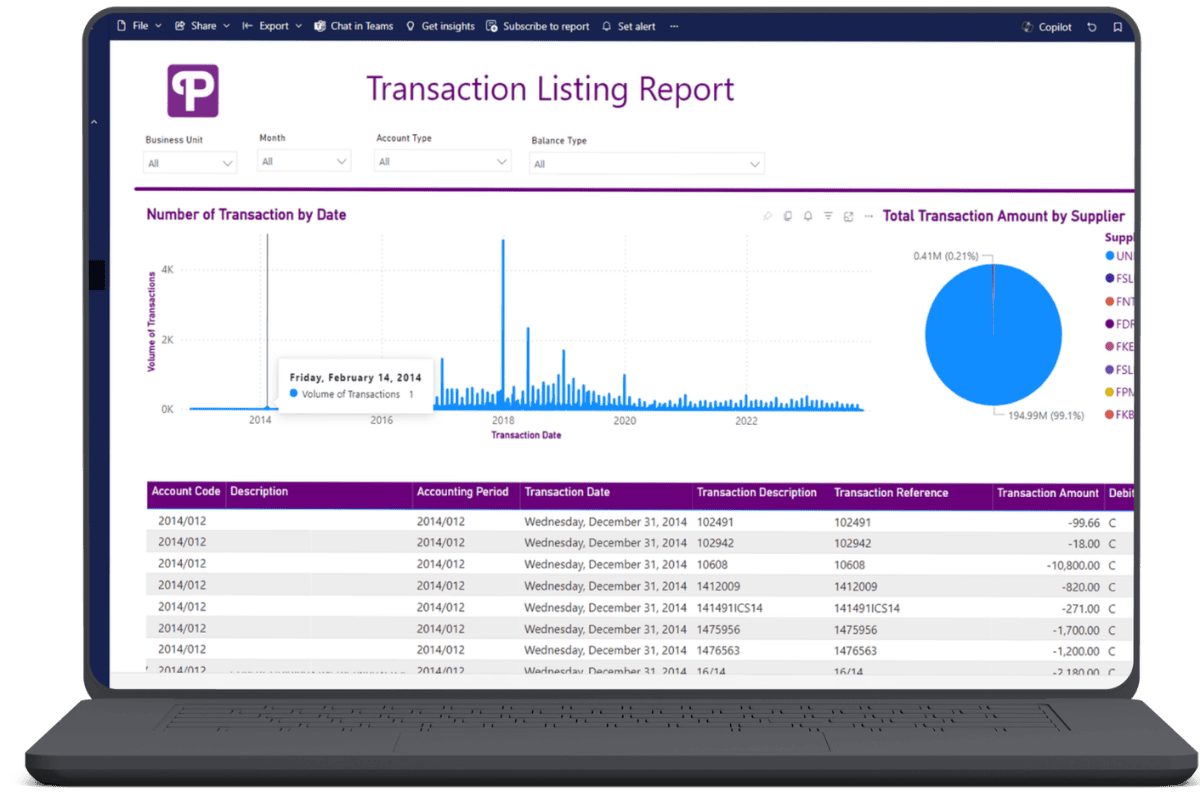
Leveraging Microsoft Azure® Data Factory, the ProBI data management platform ensures seamless data integration, transformation, and replication, enabling you to unlock the full potential of your data and help drive business success.
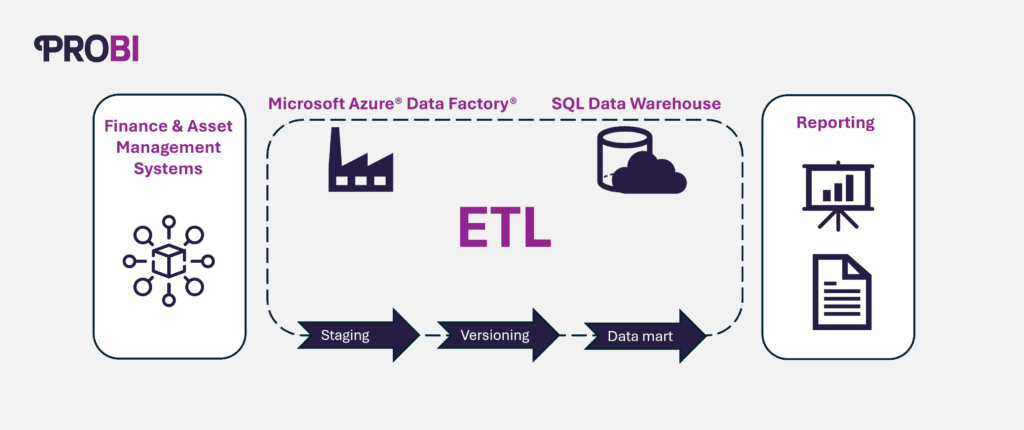
Extract, Transform and Load (ETL) process
Data Integration
- Integrate data from Octave (formerly Hexagon ALI) and Infor Cloud platforms
- Perform Extract, Transform and Load (ETL) processes to clean, transform and load data into the data warehouse
- Use Microsoft Azure Data Factory (ADF) for seamless data integration and orchestration
Data Modelling
Create logical and physical data models to support complex analytical queries.
Data Storage
Provide scalable, cloud-based storage to support growing data volumes and performance needs.
Why choose ProBI?
Benefits of our central data repository:
- Scalability – Accommodate growing data volumes
- Flexibility – Enable seamless integration
- Security – Protect data with comprehensive security measures. ISO 9001 and SOC 2 Type 2 compliance
- Support – Benefit from ongoing support and maintenance from our team
Contact us today to find out more about how your organisation can benefit from our data management solution.
FAQ’s
How does ProBI improve business intelligence?
ProBI brings data from different business systems together into a consistent, trusted structure. This gives organisations a clearer view of performance, reduces manual reporting effort and provides reliable data for dashboards, reports and business decisions.
What is a cloud data warehouse?
A cloud data warehouse is a central location for storing and organising business data from multiple systems. It provides a consistent source of information for reporting, analysis and performance monitoring, and can scale as data volumes and reporting needs grow.
Which technologies power ProBI?
ProBI uses Microsoft Azure technologies, including Azure Data Factory, to securely connect, move and transform data across business systems. This provides a scalable foundation for data integration, reporting and analytics.
What data sources can ProBI connect to?
ProBI can integrate data from enterprise platforms including Octave Attune EAM and Infor SunSystems Cloud solutions. It can also support other data sources, subject to the interfaces and connection methods available within the source system.
What is ETL and why is it important?
ETL stands for Extract, Transform and Load. It collects data from source systems, checks and standardises it, and loads it into a central repository. This helps ensure that reports use consistent, structured and reliable information.
Can ProBI support executive dashboards and KPI reporting?
Yes. ProBI provides structured, analytics-ready data for executive dashboards, operational reports, key performance indicators and trend analysis. It can provide data to reporting and visualisation tools such as Microsoft Power BI.
Will ProBI replace our existing business systems?
No. ProBI is designed to work alongside existing systems. It consolidates selected data for reporting and analysis without replacing the systems used to manage day-to-day business processes.
How does ProBI reduce manual reporting?
ProBI can automate the collection and preparation of data that would otherwise need to be exported, combined and cleansed manually. This saves time, improves consistency and allows teams to focus more on analysis than data preparation.
Why should organisations invest in a business intelligence platform?
A business intelligence platform helps organisations make better-informed decisions using consistent and accessible data. It can improve reporting accuracy, increase operational visibility, highlight trends and help organisations gain greater value from their existing systems and information.
Our Partner's Data Source Solutions